

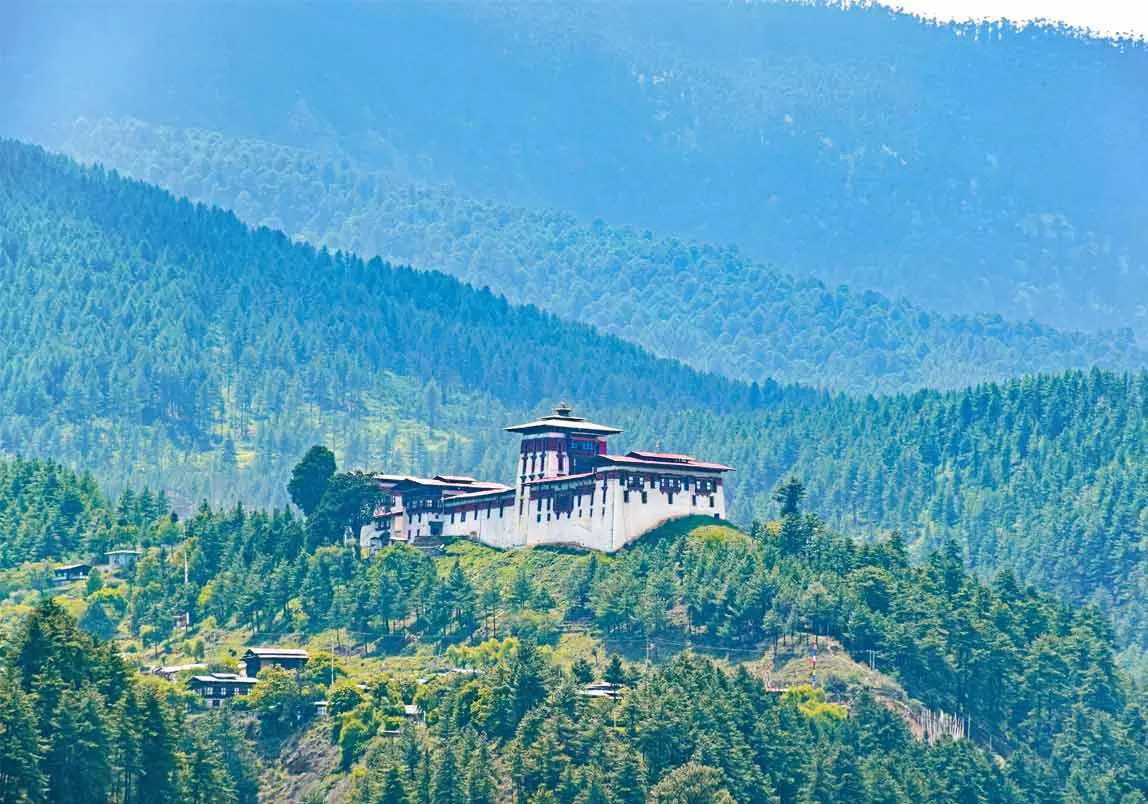
Nestled in the eastern Himalayas of Bhutan, Bumthang is a valley rich in spiritual depth and cultural resonance. Revered as Bhutan’s spiritual heartland, it represents a unique fusion of Tibetan Buddhist traditions and enduring indigenous beliefs. Its religious terrain, shaped by mythology, history, and everyday rituals, continues to define Bhutanese identity.
The Sacred Geography of Bumthang
Bumthang comprises four main valleys: Chumey, Choekhor, Tang, and Ura. The name “Bumthang” itself is open to interpretation, often linked to “beautiful field” or “valley of beautiful girls.” Locals believe the term comes from “Bum” (vessel or girl) and “Thang” (flat field), suggesting a landscape connected to sacred femininity and fertility. The valley’s natural elements—mountains, forests, and rivers—are considered inherently sacred and form the backbone of pre-Buddhist animistic beliefs that later merged with Buddhist cosmology.
Guru Rinpoche’s Sacred Legacy
The 8th-century arrival of Guru Padmasambhava (Guru Rinpoche) marked a spiritual turning point for Bumthang. As the tantric master who introduced Buddhism to Bhutan, Guru Rinpoche subdued local deities and incorporated them into the Buddhist framework. Kurjey Lhakhang, meaning “body imprint,” marks the site where he left his body print on a rock after meditation, symbolizing the conquest and integration of local spirits. Jambay Lhakhang, another revered temple, was reportedly one of 108 temples built by Tibetan King Songtsen Gampo to pin down a demoness sprawled across the Himalayas. These sacred sites weave historical facts with mythological narratives, blending past and present into a living spiritual landscape.
Pema Lingpa and the Treasure Tradition
Bumthang is also the birthplace of Pema Lingpa (1450–1521), one of Bhutan’s most cherished tertöns (treasure revealers). In Tang Valley’s Burning Lake (Membartsho), he famously emerged from underwater with sacred texts and a still-burning butter lamp, confirming his spiritual legitimacy. Pema Lingpa’s legacy continues through his lineage and the temples housing the terma (hidden teachings) he uncovered. His influence gave rise to a distinctly Bhutanese form of Buddhism, interwoven with local spiritualism yet rooted in broader Tibetan traditions.
Living Spiritual Synthesis
What sets Bumthang apart is the harmonious integration of Buddhism with ancient animistic traditions. Local spirits like yul lha (territorial deities), sa dag (earth spirits), and lu (water spirits) coexist within the Buddhist cosmological order. This synthesis was largely facilitated by Guru Rinpoche, who converted local deities into Dharma protectors.
Rituals like Duar ceremonies, Lha Cham dances, and Mewang (fire blessing) rituals illustrate this blend. These practices serve both spiritual and community functions, addressing health, harvest, and harmony. Monasteries in Bumthang continue to perform these rituals, reflecting a worldview where spiritual and worldly realms are deeply interconnected.
Sacred Sites and Pilgrimage
Bumthang hosts a constellation of pilgrimage sites:
- Kurjey Lhakhang: Built around the cave where Guru Rinpoche meditated.
- Jambay Lhakhang: One of Bhutan’s oldest temples, famed for the Jambay Lhakhang Drup festival.
- Tamshing Lhakhang: Founded by Pema Lingpa; known for its ancient murals and iron chain shirt used in ritual circumambulation.
- Membartsho (Burning Lake): Site of Pema Lingpa’s miraculous terma retrieval.
- Jakar Dzong: “Castle of the White Bird,” functioning as both monastery and administrative center.
- Padtshaling Gonpa: Founded in 1769 by Padtshaling Tulku Siddha Namgyal Lhendub.
- Shuk Drak Goenpa: A cliffside site where Guru Rinpoche meditated.
- Choedrak Monastery: Built by Gyalwa Lorepa in the 12th century.
- Tang Rimochen Lhakhang: A site marked by tiger-stripe-like imprints where Guru Rinpoche meditated.
- Zhabjethang Lhakhang: Established on a site of Guru Rinpoche’s and Tashi Khyidren’s footprints.
- Kunzangdrak Monastery: Built by Pema Lingpa in 1488 after a vision of Kuntu Zangpo.
- Thowadra Monastery: Founded by Mandarava on a sacred cliff visited by Guru Rinpoche.
- Tharpaling Monastery: Revered as a “land of liberation.”
These sites form a spiritual mandala across Bumthang, guiding pilgrims on journeys of devotion and self-discovery.
Contemporary Spiritual Life
Bumthang remains a dynamic hub of spiritual life. Annual tshechu festivals draw crowds for masked dances, blessings, and communal gathering. Monasteries continue to educate young monks in both ritual practice and Buddhist philosophy. International spiritual seekers visit Bumthang to experience its authentic teachings and living traditions.
This spiritual vitality coexists with modernization. Traditional healers and power lines share the landscape, symbolizing Bhutan’s unique blend of old and new. The spiritual worldview that sees sacredness in both temples and trees remains relevant, guiding both locals and visitors through Bhutan’s changing times.
Preservation and Continuity
Bhutan’s cultural preservation efforts, guided by the principle of Gross National Happiness, have helped protect Bumthang’s spiritual legacy. Sacred sites receive official recognition, oral traditions are documented, and monasteries continue to thrive. However, there is an ongoing need to adapt without losing the essence of these traditions as young Bhutanese engage with global influences.
Conclusion
Bumthang’s role as Bhutan’s spiritual heartland is more than symbolic. It stands as a living testament to the fusion of Tibetan Buddhist teachings and indigenous Bhutanese beliefs. This integration offers a holistic spiritual vision, where myth and history, nature and divinity, coalesce into a coherent and deeply meaningful worldview.
In Bumthang, sacred geography becomes a mirror of the soul’s journey. From ancient caves and mystical lakes to vibrant festivals and silent monasteries, every corner of this valley invites reflection, reverence, and renewal. As Bhutan strides into the future, Bumthang’s enduring spirit reminds us of the timeless power of faith, place, and tradition.