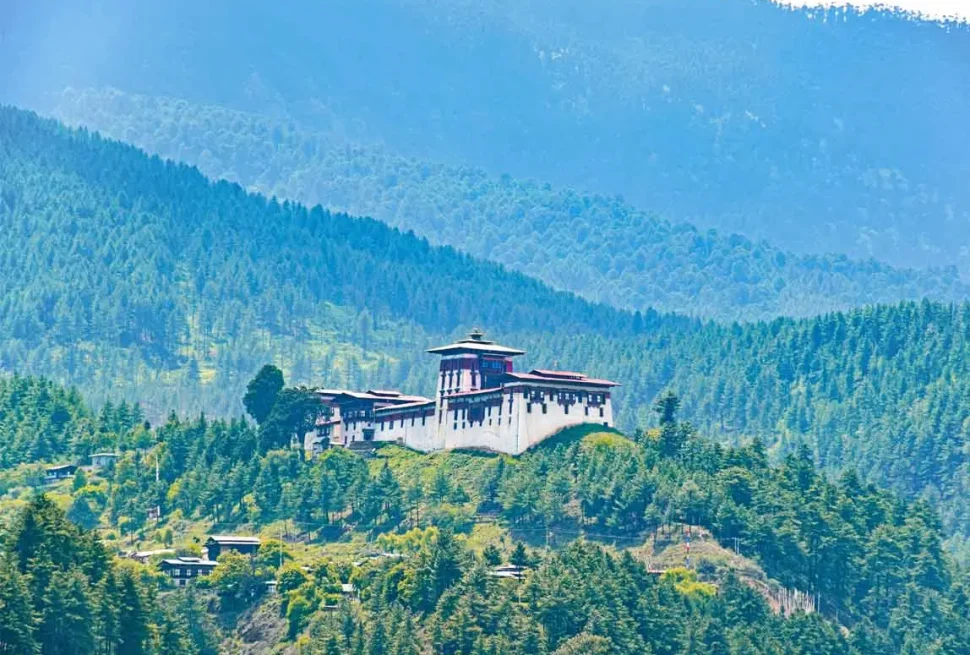
Trashi Yangtse, nestled in Bhutan’s remote northeastern corner, is untouched, deeply spiritual, and alive with tradition. Here, the majestic Chorten Kora stupa rises like a prayer made of stone, the Bumdelling wildlife sanctuary shelters both creatures and spirits, and the swift-flowing KholongChu River carries whispered mantras downstream.
This peaceful district is also famed for its intricate wood carvings. Local artisans craft authentic treasures especially the beautifully turned wooden bowls known as Dapa. It also houses one of only two national institutes dedicated to Bhutan’s thirteen traditional arts and crafts (Zorig Chusum).Trashi Yangtse remains one of Bhutan’s most serene and lesser-visited destinations, offering an immersive journey into the country’s spiritual and artistic heart.
The Cave Where Legends Live
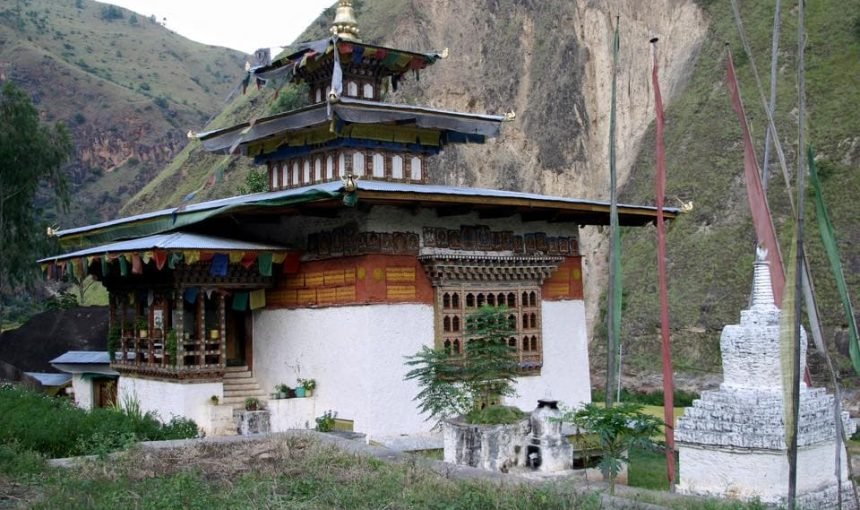
Just before the district boundary lies Gomphu Kora “Gomphu” meaning the sacred meditation cave, while “kora” refers to the ancient practice of walking in devotion around holy sites. This is where Guru Rinpoche himself once meditated, leaving an indelible spiritual imprint.
Behind the temple stands a magnificent black rock, home to a legend that has shaped souls for generations. Long ago, Guru Rinpoche came here, unaware that an old friend from a past life awaited him, transformed by envy into a dark serpent demon named Gangan Yonga Choephel.
Once spiritual companions, the demon had watched Guru Rinpoche achieve enlightenment while he himself fell into darkness. Disguised as a massive cobra, he coiled around the meditation cave, casting spells of terror through the night.
But Guru Rinpoche responded not with violence but with compassion. Transforming into a radiant Garuda, he engaged the demon in a dance of love and understanding, reminding the serpent of their sacred bond. The demon wept in remorse, and both beings pressed their thumbprints into the rock, a seal of forgiveness that pilgrims still touch today.
The message is profound: even the darkest hearts can be transformed by compassion.
Testing the Soul
The sacred rock challenges every visitor. A narrow passage snakes through the cave so tight that pilgrims must move like serpents to navigate it. The brave attempt the “stairway of the dakinis,” a treacherous climb where only the spiritually pure can reach the summit.
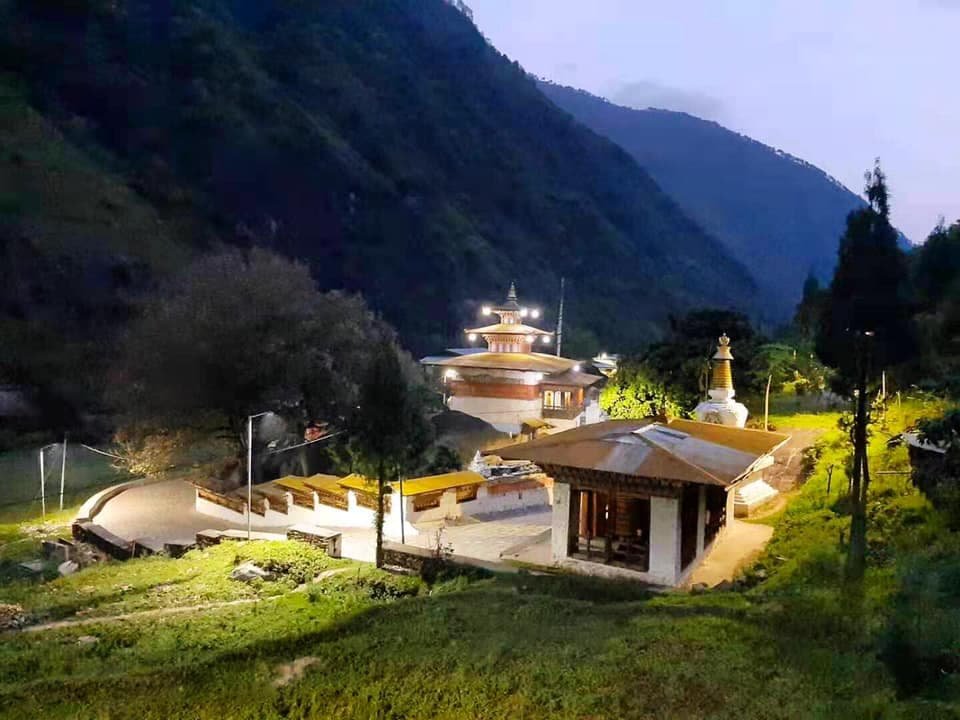
On auspicious days, holy water flows from the rock, believed to be Guru Rinpoche’s nectar of immortality. Pilgrims line up with bottles and prayers, while childless women carry heavy stones around the kora path, their hope as weighty as their burden.
A Four-Year-Old’s Sacred Journey
My own story began when I was just four, clinging to my father’s back as our horse navigated mountain passes that seemed to touch the sky. It was the longest journey of my young life days through valleys where mist danced with morning prayers.
Every year, thousands make this pilgrimage from as far as Tawang in Arunachal Pradesh, sharing one mission: to witness the triumph of good over evil and carry home the promise of protection for our communities.
Arriving at my first festival, I was struck by the overwhelming power of collective devotion. The crowd was beautifully diverse farmers in their finest traditional dress, Dakpa pilgrims who had walked for days, and elders whose faces told stories of countless pilgrimages. This gathering felt as vibrant as any great city my first glimpse of how vast and interconnected our world truly was.
When monks emerged in vivid robes and mysterious masks to perform the ancient Cham dances, profound stillness settled over the crowd. These weren’t mere performances they were prayers made visible, teachings transformed into movement. Each mask told a story, and each step carried meaning. I watched Guru Rinpoche’s compassion unfold in dance and felt the promise of protection settle over our community.
The Festival That Never Ends
What makes Gomphu Kora unique is the night-long kora pilgrims circumambulating the temple in an endless circle of devotion beneath the stars. As darkness deepens, the walking continues, creating a river of faith that flows until dawn. Prayer flags flutter like captured blessings, butter lamps flicker like earthbound stars, and footsteps become a mantra that transcends language.
This is where festival becomes communion with the sacred, with each other, with something larger than ourselves.
An Invitation to Transform
Years have passed, but Gomphu Kora lives in me still. This place taught me that true travel is not about collecting destinations, it is about allowing places to collect pieces of your soul.
If you hunger for travel that reaches beyond sightseeing into soul-seeing, if you want a journey that leaves you fundamentally changed, then Trashi Yangtse’s Gomphu Kora Tsechu is a experience like no other.
Come not as a spectator but as a participant. Come ready to be challenged by sacred rocks and narrow passages. Come prepared to walk in circles under stars that have witnessed a thousand years of prayers. Come willing to discover that sometimes the longest journeys lead us home to ourselves.
In Trashi Yangtse, transformation isn’t a promise; it’s an inevitability.