— 3.1
The Thirteen Arts
A renowned school of Zorig Chusum — Bhutan’s thirteen traditional arts — trains young artisans in painting, wood sculpture, lacquer-work and embroidery, a sister to the academy in Thimphu.


Omba Travel — Destinations
The Land of Auspicious Fortune
Eastern Bhutan1,750–1,880 mA district since 1992
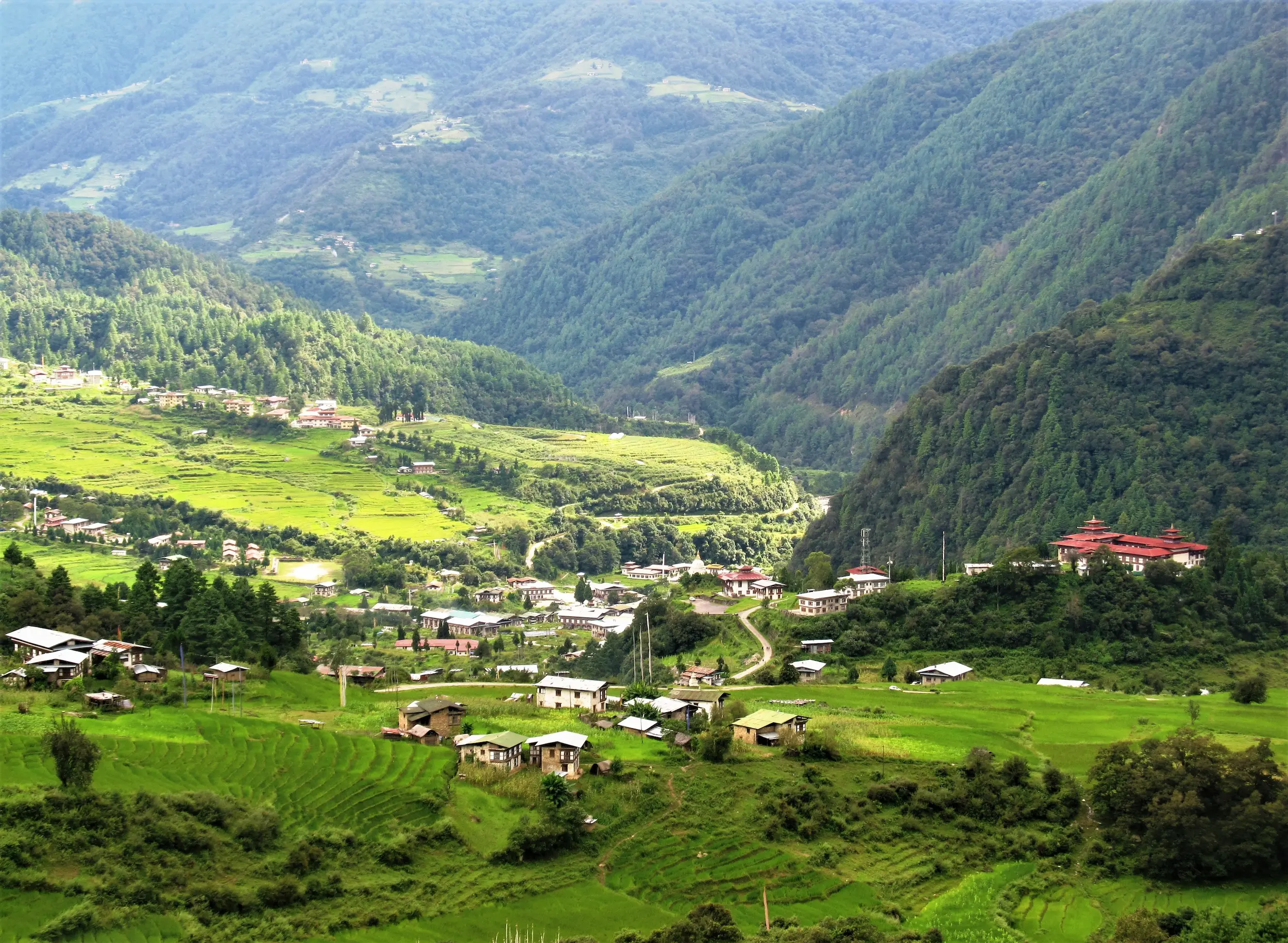
In the far east of Bhutan, where the mountains soften into deep river valleys, lies Trashi Yangtse — a green and unhurried corner of the kingdom whose name means the fortress of auspicious fortune. It is a place of white stupas and old pilgrim trails, of artisans who still turn bowls and press paper by hand, and of wide protected wilderness where cranes come to winter.
Far from the well-trodden routes of the west, Trashi Yangtse rewards the traveller willing to go the distance. Here Bhutan feels older and quieter — its faith more intimate, its craft more alive, its welcome warmer for being so rarely offered. This is the east as it has always been.
The Story
The name Trashi Yangtse is said to have been given in the 15th century by the great treasure-revealer Pema Lingpa, who blessed this valley on his travels through the east. For centuries it was a trading crossroads between eastern Bhutan and Tawang, where salt, wool and grain moved along the old caravan trails.
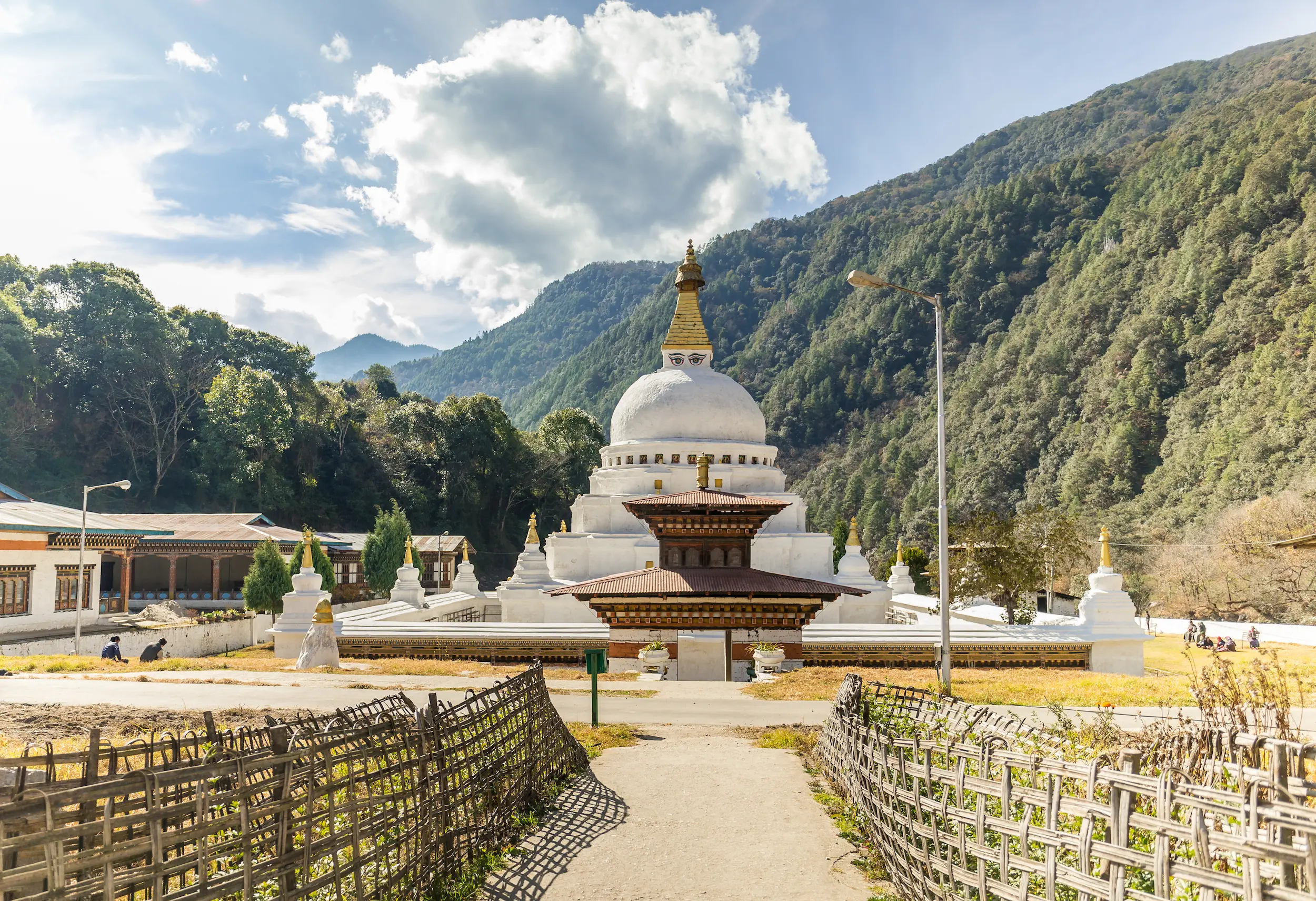
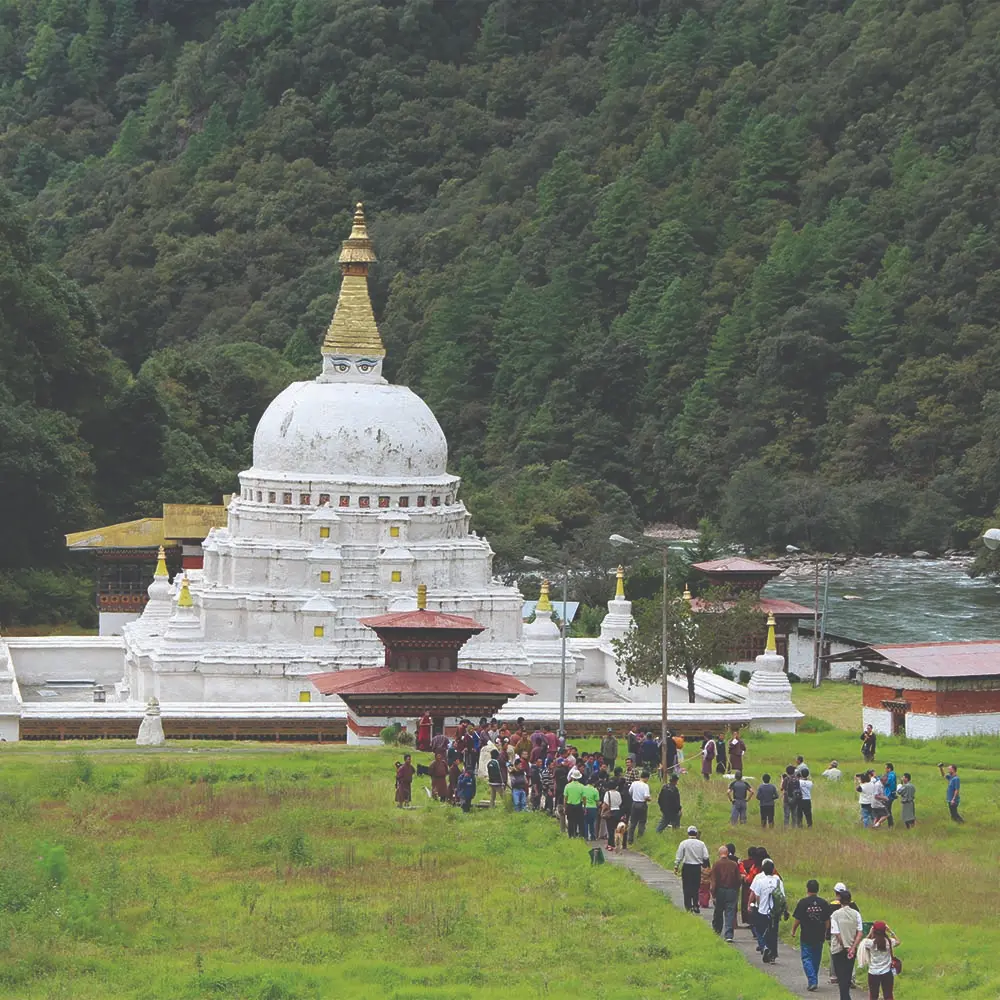
At its heart stands Chorten Kora, a large white stupa modelled on Boudhanath in Nepal, raised from the 1740s by Lam Ngawang Loday and later consecrated by the 13th Je Khenpo. Bound to it is the tender legend of a young Dakpa girl from Tawang who, it is told, entered the stupa in devotion — a story still honoured by pilgrims who circle its walls each year. Long part of Trashigang, the valley became a district in its own right in 1992.
Living Culture
Trashi Yangtse gathers many of the east’s peoples — Yangtseps, Tshanglas, Bramis, Khengpas and Kurtoeps — and a chorus of languages, from Dzala in the north to Tshangla in the south. But across Bhutan the valley is known above all for its craftsmanship, taught, made and quietly kept alive here more than almost anywhere else in the country.
The Crafts
— 3.1
A renowned school of Zorig Chusum — Bhutan’s thirteen traditional arts — trains young artisans in painting, wood sculpture, lacquer-work and embroidery, a sister to the academy in Thimphu.
— 3.2
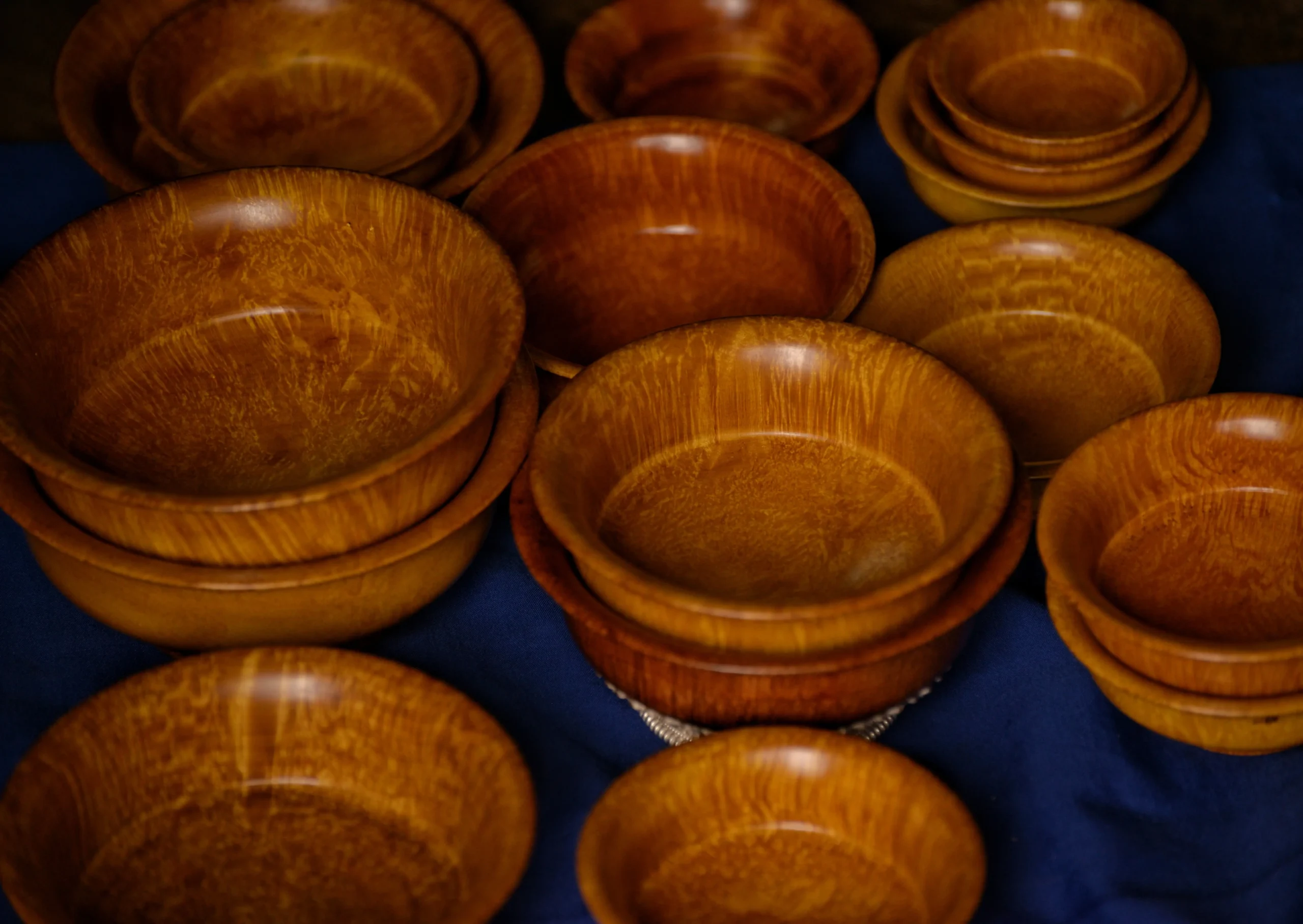
The valley is famous for its dapa — lustrous bowls and cups turned from burl wood on foot-powered lathes and finished in natural lacquer, among the most prized handicrafts in Bhutan.
— 3.3
Artisans still make desho, handmade paper pressed from the bark of the daphne shrub — once reserved for sacred texts, now carried home as lamps, cards and keepsakes.
Here Bhutan feels older and quieter — its faith more intimate, its craft more alive, and its welcome all the warmer for being so rarely offered.
Trashi Yangtse · Eastern Bhutan
Why Visit
01
Genuinely off the beaten path
One of Bhutan’s least-visited valleys — authentic, unhurried and far from the tourist trail.
02
A deeply sacred landscape
Blessed meditation sites of Guru Rinpoche, and cliff hermitages revered across the Buddhist east.
03
Crafts you can watch being made
Meet the artisans turning lacquered bowls and pressing daphne-bark paper by hand.
04
Wild, protected country
Bumdeling Wildlife Sanctuary shelters the endangered black-necked cranes that winter in the valley.
05
Pilgrim festivals at Chorten Kora
Time your visit to the kora, when pilgrims from Bhutan and Tawang circle the great white stupa.
06
The warmth of the east
The gentle, generous welcome of Bhutan’s eastern valleys — small villages, big hearts, slow days.
Omba Travel
Let us weave Trashi Yangtse into a journey through Bhutan’s east — its stupas, its artisans and its quiet valleys, at the pace they deserve.
The Land
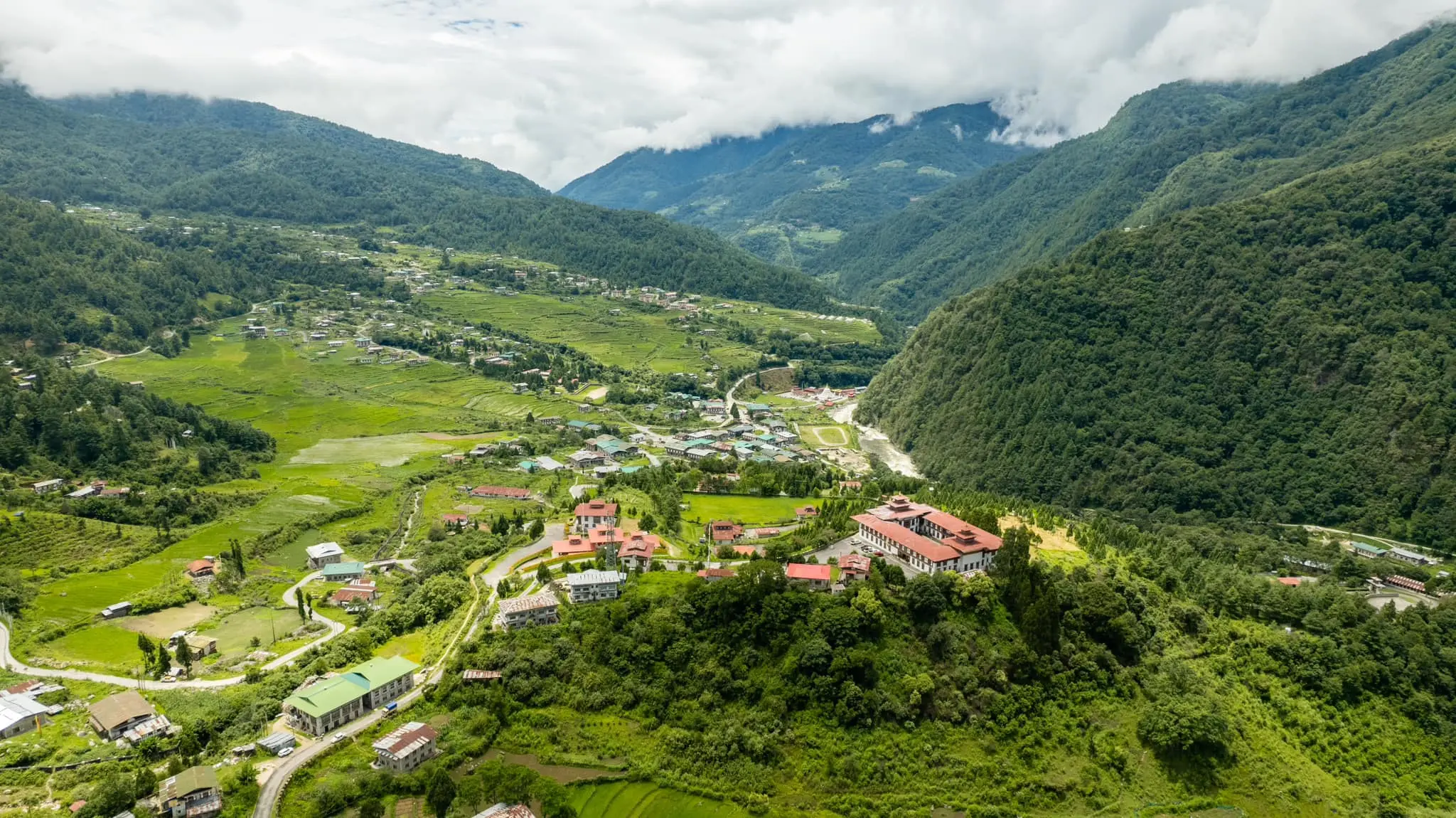
Trashi Yangtse lies in the far north-east of Bhutan, where the kingdom meets Tibet and India’s Arunachal Pradesh. Its land falls from wild, forested uplands in the north — much of it protected within Bumdeling Wildlife Sanctuary — to warm river country along the Drangme Chhu in the south.
Around the town the valley is gentle and green: terraced rice and maize fields, whitewashed farmhouses and slopes of sub-tropical and temperate forest. It is a landscape made for slow days, where the road bends past prayer flags and the rhythm of village life still sets the pace.
The Journey
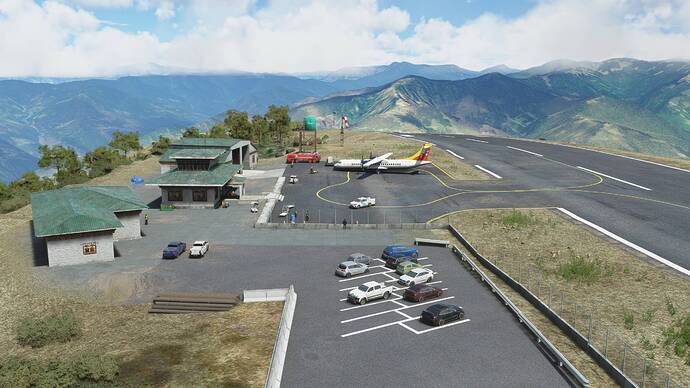
Trashi Yangtse is one of Bhutan’s most remote districts — a journey to the far east that rewards those who make it. Most travellers arrive through Trashigang, the eastern hub, then follow the Drangme Chhu north past Doksum and Gomphu Kora.
By air
Fly from Paro to Yongphulla, near Trashigang, on a Drukair domestic flight, then continue by road.
By road from the west
A scenic multi-day drive across central Bhutan, usually with an overnight stop in Bumthang.
From India’s north-east
Enter at the southern border town of Samdrup Jongkhar and travel north to Trashigang.
The Seasons
Lower and warmer than Bhutan’s central valleys, Trashi Yangtse enjoys warm summers and cool, dry winters, with most of its rain falling in the monsoon months.
Best time
Spring
Mar – May
Mild, bright days — ideal for the hike to Omba Ney and the pilgrim season at Chorten Kora and Gomphu Kora.
Summer
Jun – Aug
Warm and lush, with daytime highs in the mid-20s°C and the heaviest of the monsoon rain.
Best time
Autumn
Sep – Nov
Clear skies and harvest-gold fields, as the first black-necked cranes return to Bumdeling.
Crane season
Winter
Dec – Feb
Cool, dry and still, with cold nights near freezing — the quiet season of the cranes.
Altitude
At around 1,750 to 1,900 metres, Trashi Yangtse sits well below Bumthang and the high passes of central Bhutan, so most travellers feel at ease from the moment they arrive. Temple visits, craft workshops and village walks are gentle and rewarding; only the pilgrim hikes climb higher.
Easy
Chorten Kora, the arts school, woodturners and village walks
Moderate
The pilgrim hike to Omba Ney, at around 2,300 m
Challenging
The full-day climb to Rigsum Goenpa, up to 3,000 m
Elevations at a glance
Metres above sea level
Bumthang ~2,600 m
Gongza Ney
927 m
Trashi Yangtse
1,750–1,880 m
Bumdeling
~1,900 m
Omba Ney
~2,300 m
Rigsum Goenpa
up to 3,000 m
Sacred Heritage
Few corners of Bhutan hold so many footprints of its saints. Here the old stories are not kept behind glass — they are walked, circled and celebrated every year.
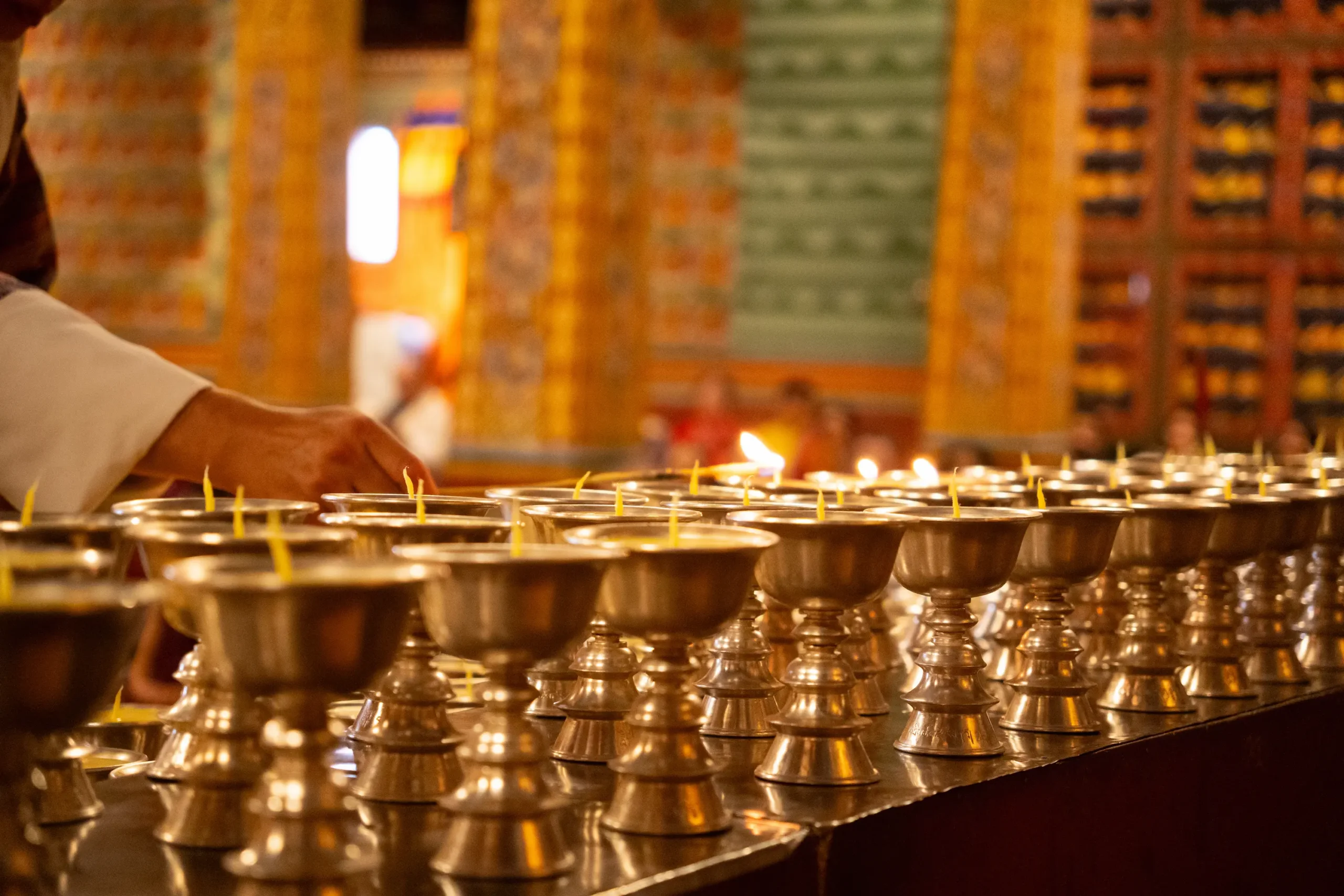
In the 15th century the great treasure-revealer Pema Lingpa travelled through the east and, it is said, gave Trashi Yangtse its name — the fortress of auspicious fortune. Tradition also credits him with founding the old dzong on its ridge above the Dongdi Chhu.
Chorten Kora was raised from the 1740s by Lam Ngawang Loday, modelled on the great Boudhanath stupa in Nepal. Its legend of a young Dakpa girl from Tawang who entered the stupa binds it to the people across the border, who still come to circle it each year.
At the cliffside hermitage of Omba Ney, Guru Rinpoche is said to have meditated for two months, and the sacred syllable OM appears in the rock. With the sites of Aja and Hungrel, it completes the three syllables of the mantra Om Ah Hung.
At Gomphu Kora he is said to have become a garuda to trap a demon inside a great boulder, leaving his imprints in the stone. Nearby at Gongza Ney, beside the Drangme Chhu, his consort Yeshe Tsogyal offered him tea at midday — the meaning of the site’s name.
Celebrations
Festival dates follow the Bhutanese lunar calendar and move each year — we’ll time your journey to meet them.
Featured festival
First Bhutanese month · Feb–Mar
Chorten Kora
Each spring the great white stupa becomes the heart of the east. Families in their finest ghos and kiras circle it through the day, while stalls and games fill the fields around — a pilgrimage and a joyful gathering in one.
15th
Dakpa Kora
Pilgrims come from Tawang, across the border
30th
Drukpa Kora
Bhutanese gather from across the east
Gomphu Kora Tshechu
Days of devotion at the sacred boulder in the second lunar month, drawing pilgrims from across the east and from Arunachal Pradesh.
Crane season in Bumdeling
From October to March, endangered black-necked cranes winter in the valley — a quiet spectacle for patient eyes.
Rest & Taste
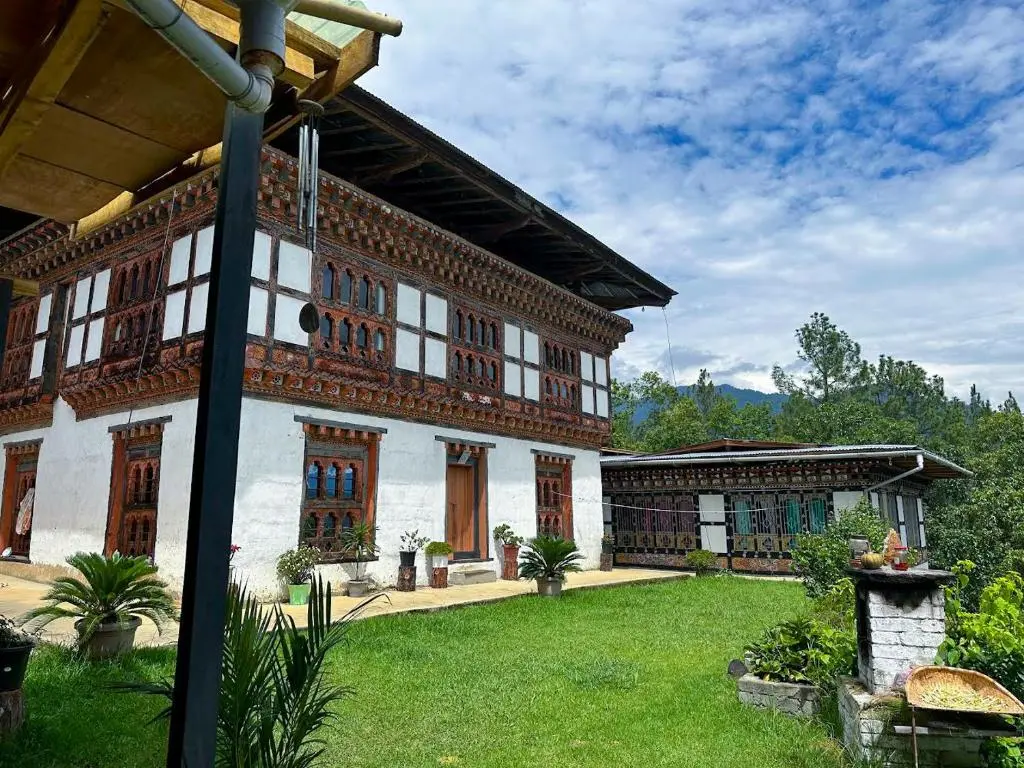
Trashi Yangtse offers simple comfort rather than luxury — a small handful of hotels in town, warm village homestays and camps for those who hike. We choose the most characterful places available and look after every detail.
Town hotels
Small, family-run hotels close to Chorten Kora.
Village homestays
Stay with families in villages such as Om Bha, near Omba Ney.
Camping
Comfortable camps on pilgrim hikes and treks.
Tastes of the east
Staple
Maize
The grain of eastern Bhutan, eaten in place of rice in many homes.
Dairy
Zoetay
Mature eastern cheese — greenish, pungent and much loved.
Poured
Suja
Salty butter tea, offered to every guest who crosses the threshold.
Brewed at home
Ara
The home-brewed spirit of the villages, shared in welcome.
Plan Your Time
Trashi Yangtse is far enough to deserve more than a day trip — stay long enough to let the quiet of the east settle in.
2Nights
Chorten Kora at dusk, the woodturners and the school of the thirteen arts, with Gomphu Kora and Gongza Ney on the road from Trashigang.
3+Nights
Time for the pilgrim hike to Omba Ney, the cranes of Bumdeling in winter or the long climb to Rigsum Goenpa — at the unhurried pace of the east.
Why Travel With Us
Bhutanese & local
A genuinely Bhutanese company, run from our home in Thimphu. You travel with people who know these valleys as home — not a foreign agency booking from afar.
Travel with intention
We build journeys with room to breathe — time to sit in a temple courtyard, walk a mountain path, or simply take in the view. Depth over checklists.
Tailor-made for you
Every itinerary is handcrafted around your interests, your pace and your travel dates. Nothing off the shelf — only a trip that fits you.
Real cultural access
Genuine encounters and local connections, with festivals, monasteries and quiet corners timed just right — the Bhutan most visitors never quite reach.
Comfort & care
Handpicked places to stay, your own private guide and driver, and every detail looked after so you can simply enjoy the journey.
Everything handled
Visa, permits and the Sustainable Development Fee — all arranged for you. You choose the dream; we take care of the paperwork.
Omba Travel
Tell us how you like to travel, and we’ll craft a journey through Bhutan’s far east around you.