— 3.1
Bangchung
The woven lunch box
Two finely woven bamboo halves that fit snugly together, patterned in diamonds of natural dyes — used to carry rice to the fields and to serve guests.


Omba Travel — Destinations
27° N · 90° E
Central Bhutan · Kheng
The green heart of Kheng
South-central Bhutan
Above the Mangde Chhu
3 National parks
94% Forest
1655 Dzong
At a Glance
A wild, green and deeply traditional corner of Bhutan — here is the district at a glance.
94%
Forest cover
Forest blankets almost the entire district
3
National parks
Royal Manas, Jigme Singye Wangchuck & Phrumsengla
2,421km²
District area
Eight gewogs and 153 villages
1,905m
Zhemgang town
On a ridge above the Mangde Chhu
1655
Dzong built
Uniting the three regions of Kheng
33
Festivals a year
From village rites to the Zhemgang Tshechu
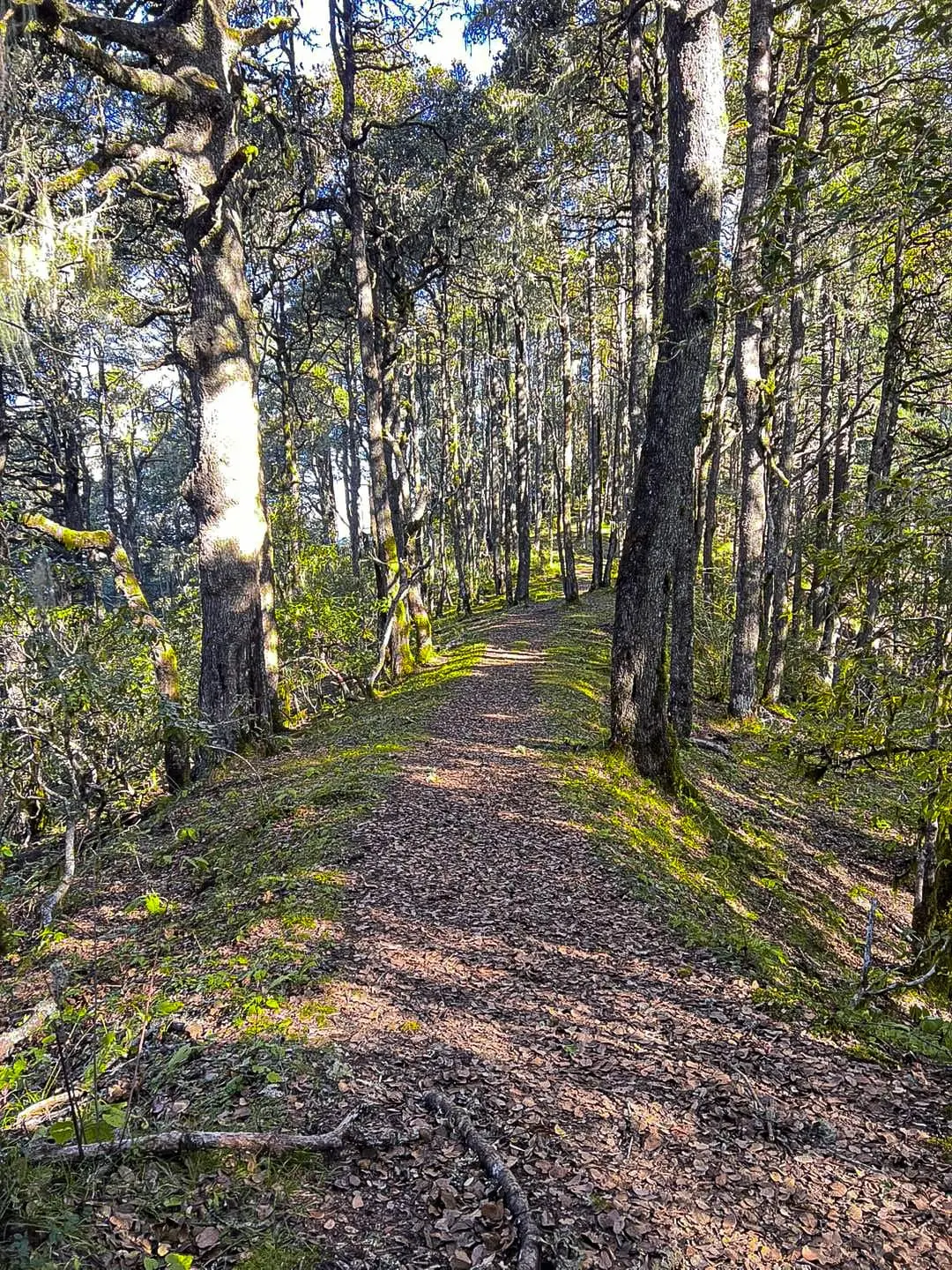
South of Trongsa, where Bhutan’s mountains fall away towards the plains, lies Zhemgang — the old region of Kheng. Nearly all of it is forest, and three national parks meet across its ridges and river valleys, sheltering some of the rarest wildlife in the Himalaya.
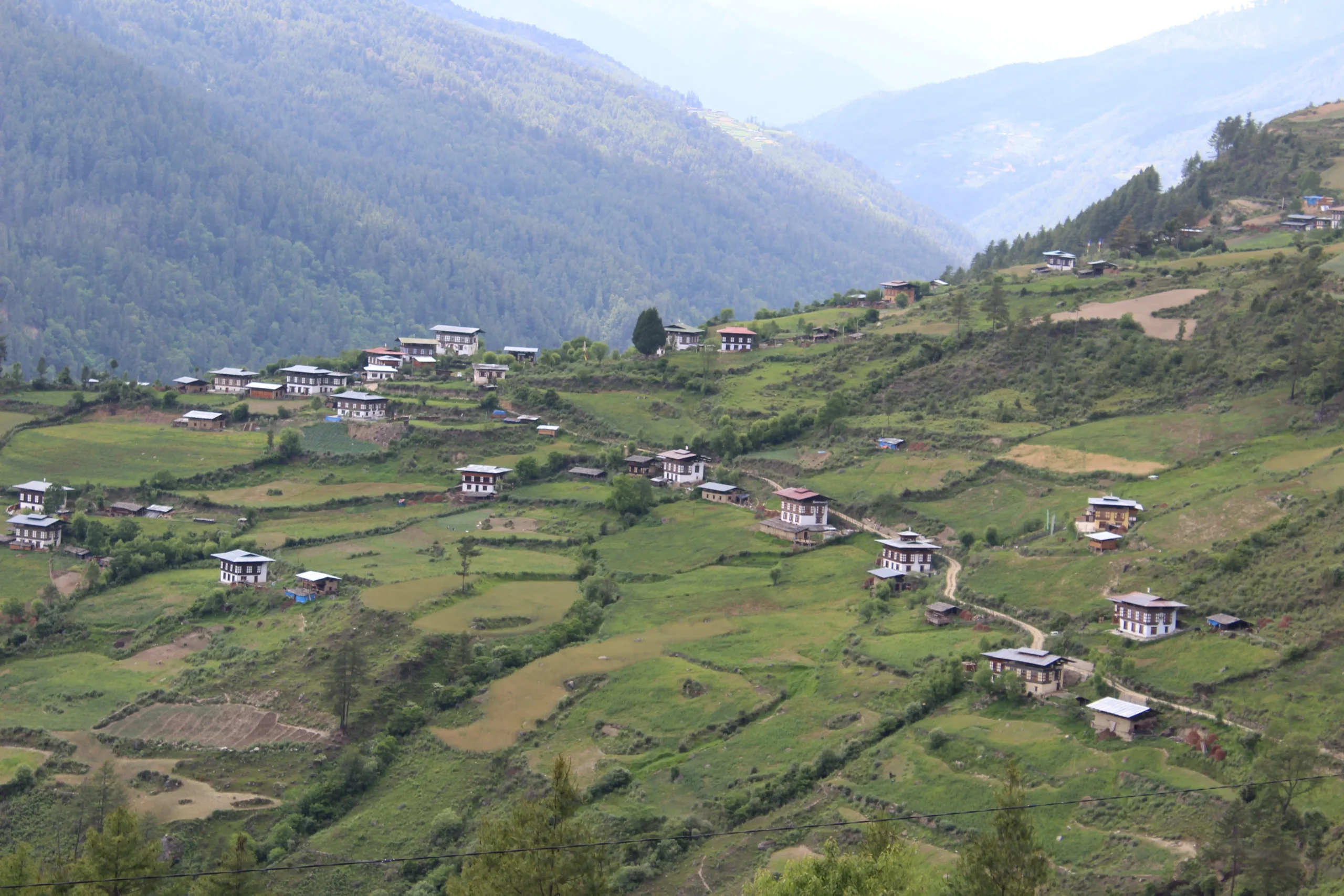
This is one of the kingdom’s least-visited corners, and one of its most rewarding. Villages cling to green hillsides above the Mangde Chhu, bamboo is woven into every part of daily life, and traditions older than Buddhism in Bhutan are still honoured alongside it. Few travellers come this way — those who do find a Bhutan that feels entirely its own.
The Story
The Kheng people have lived in these hills for thousands of years. Their land was long divided into three regions — Upper, Middle and Lower Kheng, known together as Khengrig Namsum — each ruled by its own local chieftains.
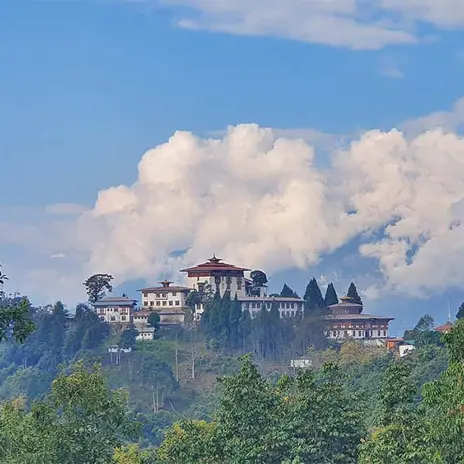
In the 12th century the Drukpa Kagyu master Lam Zhang Dorji Drakpa founded a hermitage on a ridge high above the Mangde Chhu, and the district still carries his name. In 1655, Zhabdrung Ngawang Namgyal ordered a dzong raised on the same site to mark the unification of the three Kheng regions under one rule.
A survivor of fire. The dzong’s most sacred chapel keeps a six-inch gold-plated statue of Lam Zhang that has come through two fires unharmed.
Living Culture
The Khengpa speak their own language, Khengkha, and keep a rich heritage of folk songs and dances. Ancient Bon rituals are still practised here alongside Buddhism, honouring the spirits of mountain, forest and water.
Faith is woven through the landscape — around 90 temples and more than 300 chortens, sacred sites such as Buli Tsho, the lake palace of the guardian deity Kuntu Zangmo, and some 33 festivals a year, from village rites to the masked dances of the Zhemgang Tshechu.
The Crafts
Kheng is famed across Bhutan for tsharzo — the art of weaving bamboo and cane. Almost everything a household needs, from lunch boxes to hats, can be made by hand from the forest around it.
— 3.1
The woven lunch box
Two finely woven bamboo halves that fit snugly together, patterned in diamonds of natural dyes — used to carry rice to the fields and to serve guests.
— 3.2
A vessel for ara
A tall bamboo container for carrying water and home-brewed ara, the village spirit shared at every gathering and celebration.
— 3.3
The farmer’s hat
A broad woven hat of bamboo and cane that shields farmers from sun and monsoon rain as they work the hillside fields.
Here the forest still sets the rhythm of life, and the old ways of Kheng are woven, sung and celebrated as they have been for generations.
Zhemgang · South-central Bhutan
Why Visit
01
Bhutan’s green heart
Around 94% forest, with three national parks — Royal Manas, Jigme Singye Wangchuck and Phrumsengla.
02
Golden langur country
Home to the golden langur, one of the world’s most endangered primates, found only in Bhutan and neighbouring Assam.
03
An ancient living culture
Meet the Khengpa, whose language, songs and Bon rituals have deep roots in these hills.
04
Master bamboo weavers
Watch artisans weave bangchung and palang by hand, and take home a piece of Kheng craft.
05
A birdwatcher’s paradise
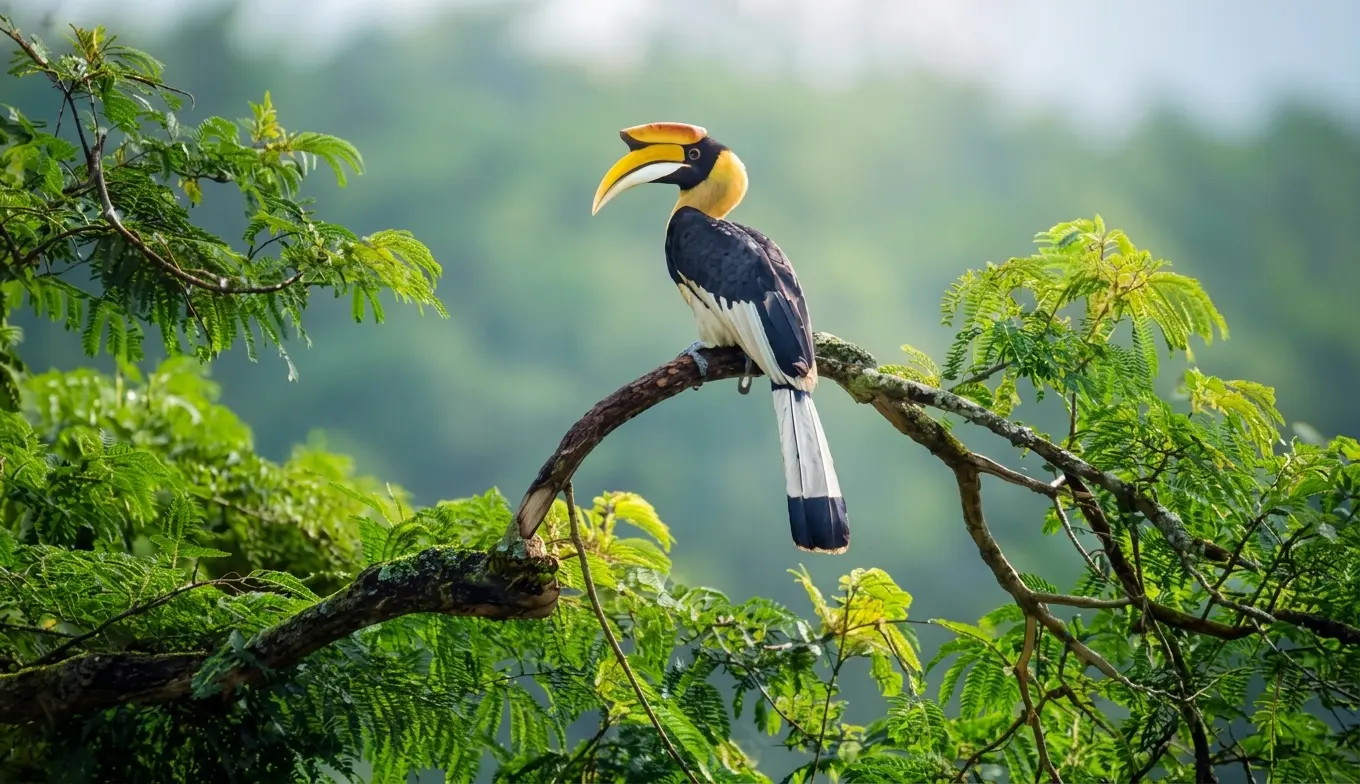
Forests alive with rare birds, from the rufous-necked hornbill to the critically endangered white-bellied heron.
06
Rivers, lakes & hot springs
Raft the Manas at Panbang, visit sacred Buli Tsho and soak in the healing waters of Duenmang Tshachu.
The Land
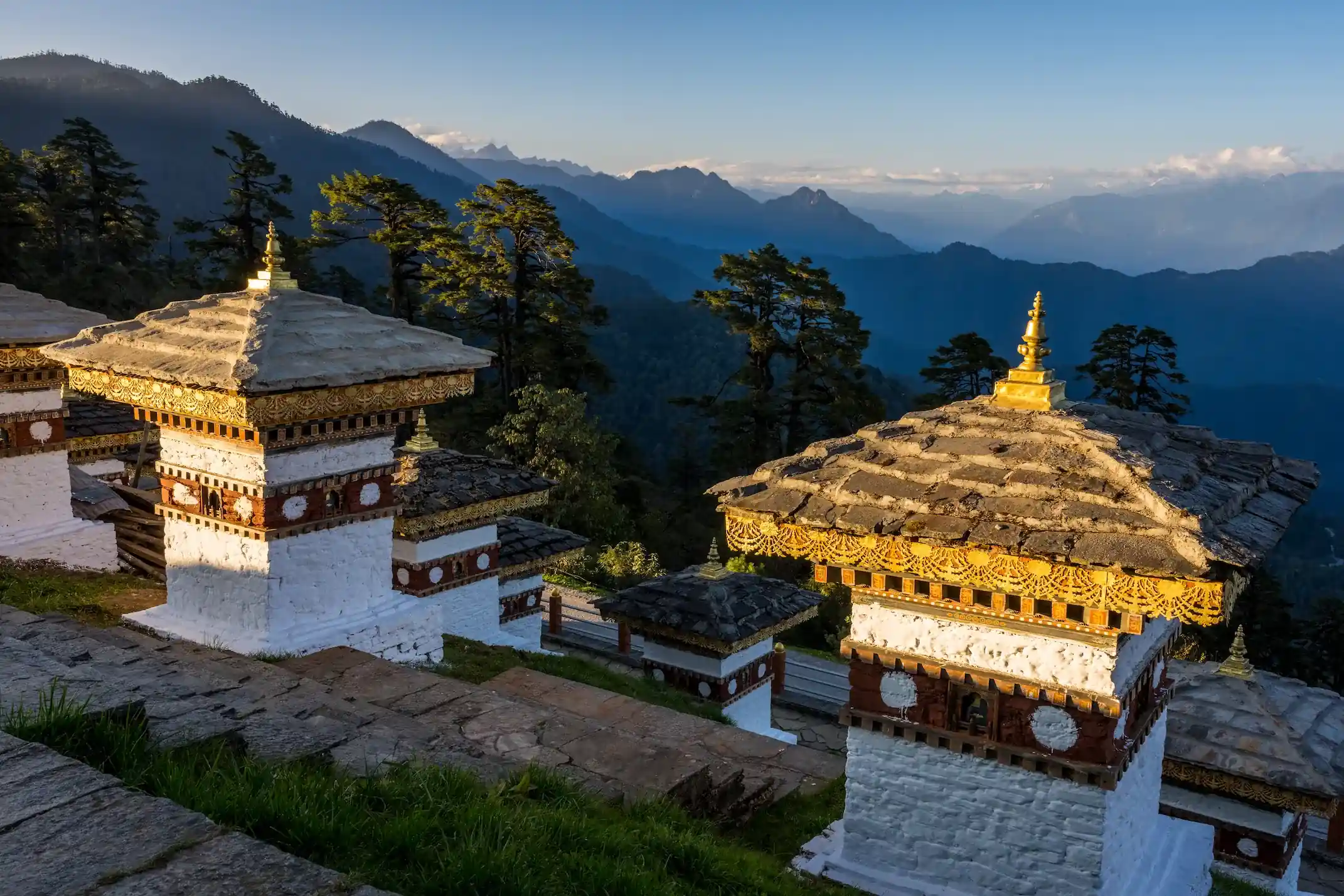
Zhemgang covers some 2,400 square kilometres of south-central Bhutan, and around 94% of it is forest — one of the greenest districts in a country famous for its trees. The land falls steeply from cool ridges in the north to warm, subtropical river country on the Indian border in the south.
Tradition divides it into three regions: Upper, Middle and Lower Kheng. Villages sit on green shoulders above the Mangde Chhu, maize and rice grow on terraces below them, and oranges ripen in the warm south. Between them run rivers, gorges and unbroken forest — the habitat that makes this one of the richest corners of the eastern Himalaya.
The Journey
Long counted among Bhutan’s least accessible districts, Zhemgang is now reached by a fine mountain road that winds south from Trongsa, through Tingtibi and on towards Panbang and the Indian border.
From central Bhutan
A scenic drive south from Trongsa, the usual approach and easily joined to a wider central Bhutan journey.
By air to the south
Gelephu, with its domestic airport, is the nearest gateway from the south; from there the road climbs north into Kheng.
To the far south
A further drive brings you to Panbang and Royal Manas National Park, on the border with India’s Assam.
The Seasons
Zhemgang stretches from cool hills to steamy lowlands, so the season you choose shapes the journey — and the wildlife you are likely to see.
Best time
Spring
Mar – May
Warm, green days, forests loud with birdsong, and the masked dances of the Zhemgang Tshechu.
Summer
Jun – Aug
Hot and wet: the district takes some 1,400 mm of rain a year, most of it now. Lush, but leeches on the trails.
Best time
Autumn
Sep – Nov
Clear skies and comfortable walking weather — the finest season for birding and village visits.
Wildlife
Winter
Dec – Feb
Cool and dry in the hills, mild in the south — the prime months for Royal Manas and its wildlife.
Altitude
Zhemgang town sits at about 1,905 metres, comfortably below Bhutan’s high valleys, while the south drops to warm lowland forest near the Indian border. Altitude is rarely an issue here; the effort is in the winding roads and the forest walks, not the thin air.
Easy
The dzong, heritage villages, orange orchards and roadside birding
Moderate
Forest walks around Tingtibi, Buli Tsho and the Duenmang hot spring
Challenging
The multi-day Gomphu–Manas eco-trail through Royal Manas
Elevations at a glance
Metres above sea level
Zhemgang town
Royal Manas
from 80 m
Duenmang Tshachu
~500 m
Panbang
lowland
Zhemgang town
1,905 m
Park high ground
to ~2,700 m
Sacred Heritage
In Kheng the old animist world and the Buddhist one have never parted company. Lakes have guardians, forests have spirits, and the year is marked by dozens of village rites.
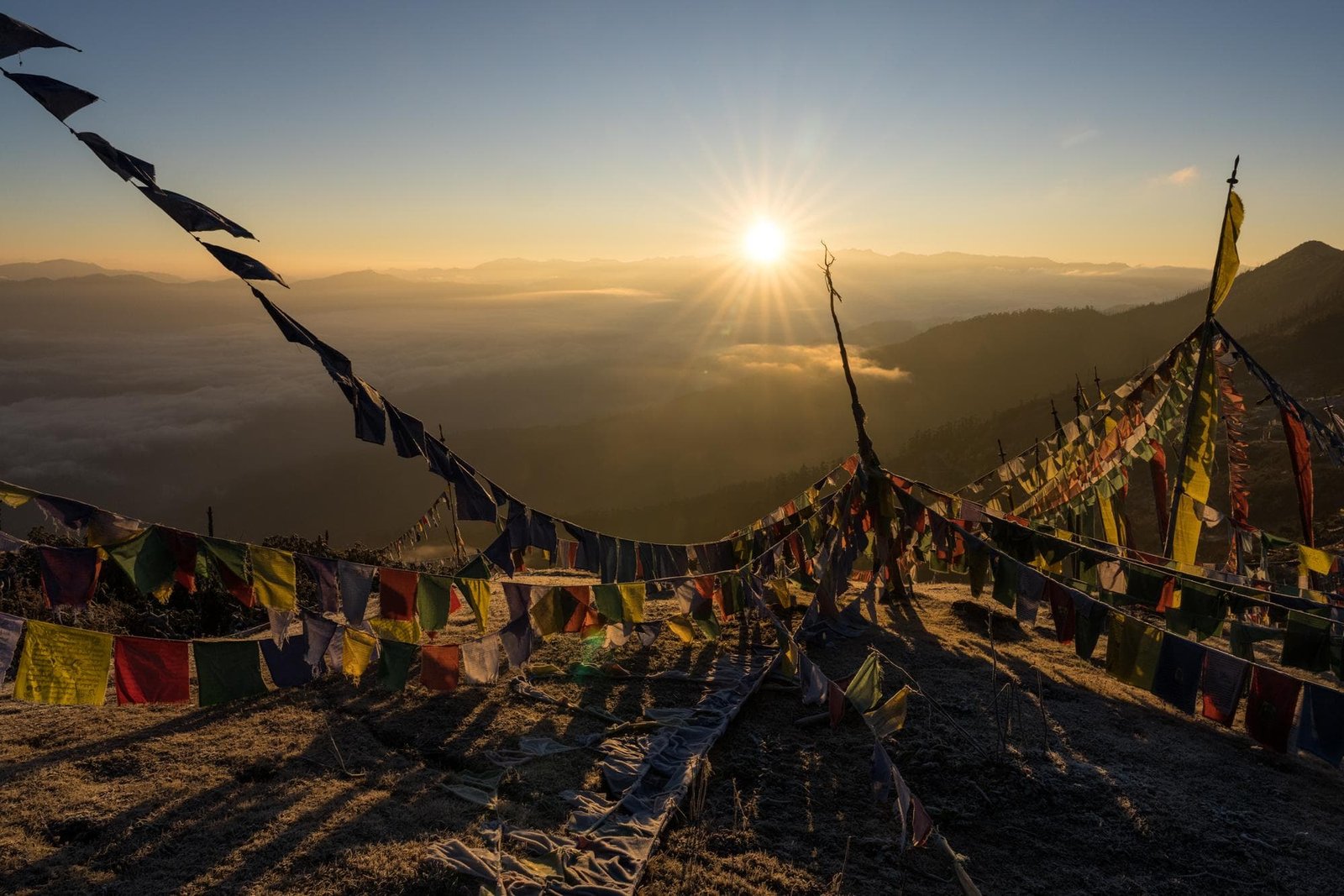
In the 12th century the Drukpa Kagyu master Lam Zhang Dorji Drakpa founded a hermitage on a ridge above the Mangde Chhu. The district still carries his name, and his six-inch gold-plated image — twice a survivor of fire — remains the dzong’s most treasured relic.
Kheng was long a patchwork of small chiefdoms. In 1655 Zhabdrung Ngawang Namgyal ordered a dzong built on Lam Zhang’s ridge as a symbol of the unification of Khengrig Namsum — Upper, Middle and Lower Kheng — under a single rule.
Above the village of Buli lies Buli Tsho, a small sacred lake held to be the palace of the guardian deity Tshomen Kuntu Zangmo. Visitors come in traditional dress, and the community closes the lake to outsiders during the harvest months.
For a district of fewer than 20,000 people, Zhemgang keeps an extraordinary calendar: some 33 festivals a year across its eight gewogs, alongside 90 temples and more than 300 chortens — among them shrines founded by the treasure-revealer Pema Lingpa.
Celebrations
Festival dates follow the Bhutanese lunar calendar and move each year — we’ll time your journey to meet them.
Featured festival
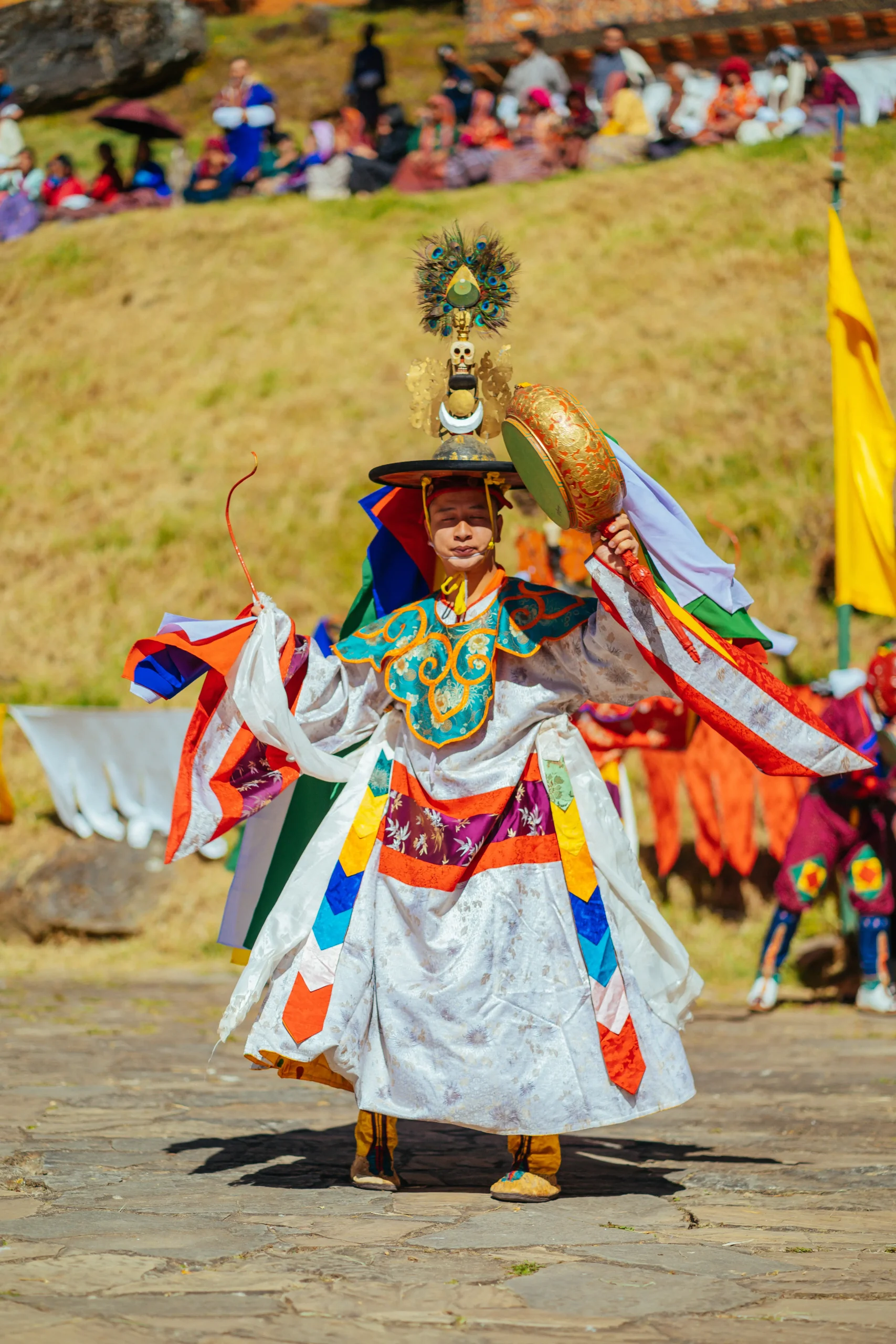
Second Bhutanese month · Mar–Apr
Zhemgang Dzong
For five days the courtyards of the old fortress fill with masked dancers, drums and villagers in their finest dress. The festival ends with the unfurling of a great thangka of Guru Rinpoche at first light — a blessing worth rising early for.
5
Days of dance
Held on the 7th to 11th of the second month
33
Festivals a year
Village rites across all eight gewogs
Village tshechus
Smaller, warmer and far off the tourist trail — Bardo, Bjoka, Goshing, Nangkhor, Nangla, Shingkhar, Phangkhar and Trong each keep their own.
Wildlife season
November to March brings the clearest days for Royal Manas — tigers, elephants, golden langurs and hornbills.
Rest & Taste
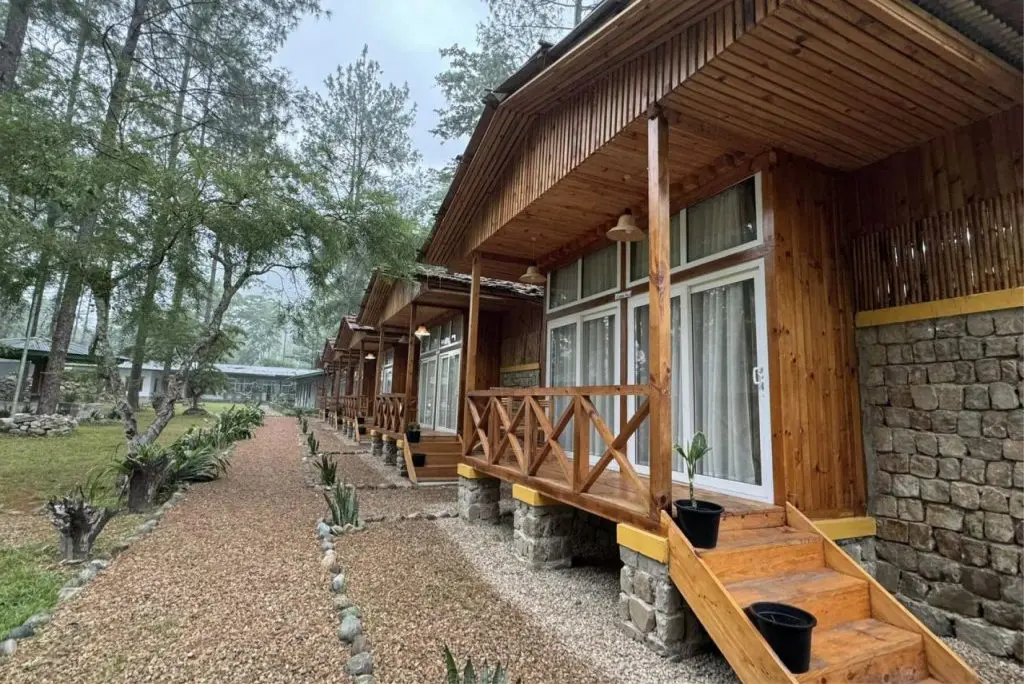
Zhemgang is community country rather than hotel country. A handful of eco-camps and small lodges serve the district, and the warmest nights are spent in village homes. We choose the most comfortable options available and arrange every detail.
Eco-camps & lodges
A small number of simple, well-run places in and around the district.
Heritage villages
Homestays in Trong and Buli, where old Kheng houses stand shoulder to shoulder.
Camping
Comfortable camps for the forest trails and the river country of the south.
Tastes of Kheng
Staple
Maize
The grain of these hills, eaten as porridge and grits alongside rice.
Orchard
Oranges
The district’s great cash crop, ripening in the warm valleys each winter.
Grown south
Cardamom
A prized crop of the lower gewogs, scenting kitchens across the region.
Brewed at home
Ara
The village spirit, poured from a bamboo palang in welcome.
Plan Your Time
The roads are winding and the distances deceptive — give Zhemgang enough time and it repays you generously.
2Nights
Zhemgang Dzong and the town, the heritage village of Trong, sacred Buli Tsho and a morning’s birding in the forests around Tingtibi.
4+Nights
Time to follow the river to Panbang and Royal Manas — wildlife by boat and on foot, the Duenmang hot spring, and nights under forest canopy.
Why Travel With Us
Bhutanese & local
A genuinely Bhutanese company, run from our home in Thimphu. You travel with people who know these valleys as home — not a foreign agency booking from afar.
Travel with intention
We build journeys with room to breathe — time to sit in a temple courtyard, walk a mountain path, or simply take in the view. Depth over checklists.
Tailor-made for you
Every itinerary is handcrafted around your interests, your pace and your travel dates. Nothing off the shelf — only a trip that fits you.
Real cultural access
Genuine encounters and local connections, with festivals, monasteries and quiet corners timed just right — the Bhutan most visitors never quite reach.
Comfort & care
Handpicked places to stay, your own private guide and driver, and every detail looked after so you can simply enjoy the journey.
Everything handled
Visa, permits and the Sustainable Development Fee — all arranged for you. You choose the dream; we take care of the paperwork.
Omba Travel
Tell us how you like to travel, and we’ll craft a journey through Bhutan’s green heart around you.